Swimming in Malta: Beaches, Coves & Favorite Spots


Interested in swimming in Malta? I’m unpacking everything you need to know about Malta’s beaches and coves – from the most popular spots to the best times to swim, and everything in between.
With its crystal-clear waters, dramatic rocky coastline, and a handful of sandy beaches, Malta is a Mediterranean paradise for swimming and seaside adventures. Because the island is small, you’re never far from the water, and its warm climate makes for a long swimming season – I’ve comfortably swum in Malta well into October.
In this guide, I’ll cover swimming in Malta from every angle: the best beaches, coves and natural pools, regional tips, water temperatures, safety advice, and the different types of swimming spots you can explore across Malta, Gozo, and Comino. Plus, grab my Google Maps list of my favorite swimming spots in Malta, so you can beach hop on the fly during your trip.
Swimming in Malta: Overview
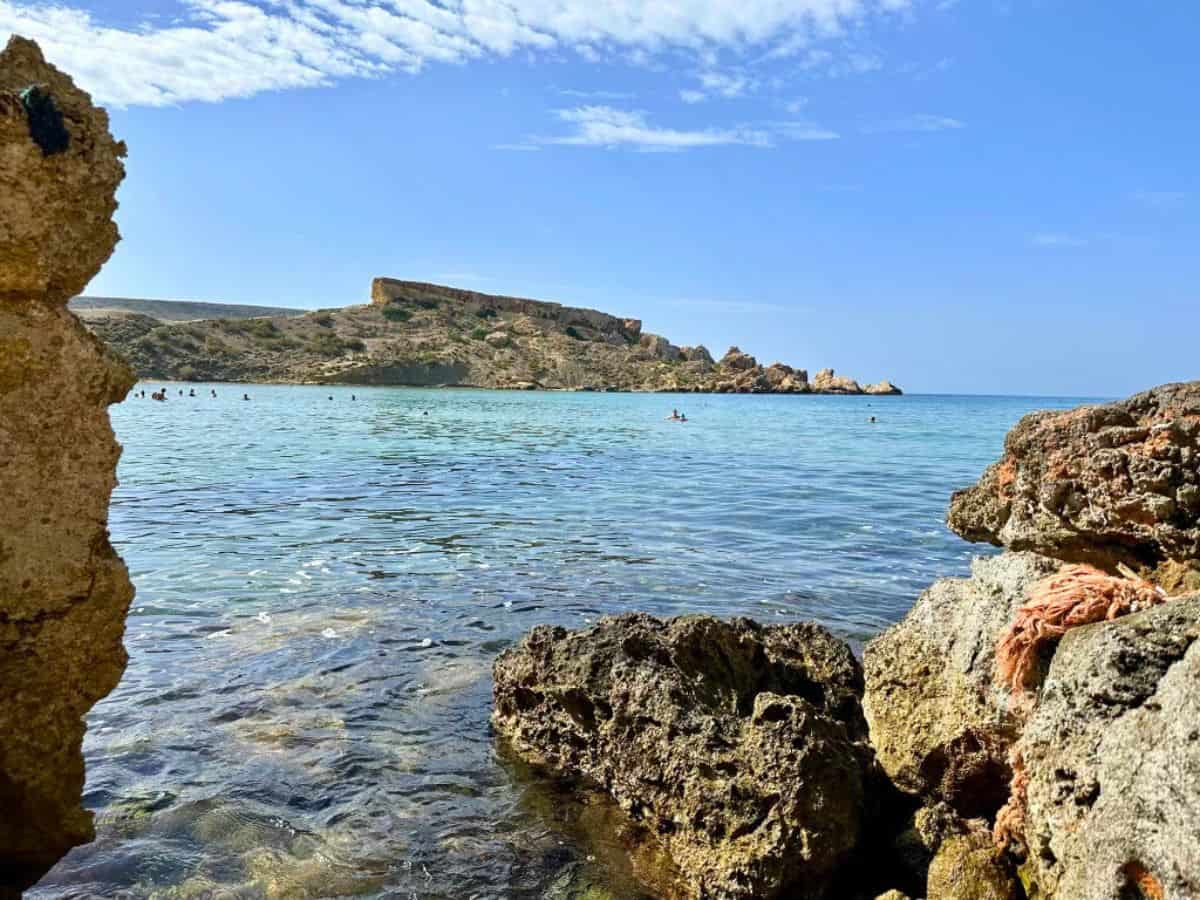
Like many parts of the Mediterranean, Malta is a rocky island – the result of sedimentary rock layers uplifted over millions of years. That means many of the beaches and coves you’ll visit are less sandy and more… well, rocky.
If you’re used to soft, sandy beaches, don’t worry – Malta has plenty of those too – but the rocky swimming spots are worth seeking out. They feel grounding, connecting you directly with nature, and offer some of the most memorable swimming experiences on the islands.
The key is preparation: check conditions before heading in and bring the right equipment. Water shoes make rocky swimming far more comfortable and safe.
Thanks to Malta’s mild climate, swimming is ideal from late spring through late fall. Realistically, most swimmers enjoy the water from June to October, though some years allow for a slightly longer season depending on weather.
Most Malta beaches and coves are easily accessible by car, rideshare, or public transportation – with a little planning, you can reach even the more off-the-beaten-path spots.
While swimming in Malta is generally safe, conditions can change quickly – especially outside the peak summer months. Winter or shoulder-season swells can make even calm-looking water hazardous. Always check local conditions, avoid swimming during strong winds, and pay attention to any posted flags or advisories.
Marine life is usually harmless, but jellyfish do appear seasonally. Most stings are mild, but it’s worth checking local jellyfish reports and watching the water before getting in. Sea urchins are another reason water shoes are a smart choice, especially at rocky swimming spots.
Water Temperatures
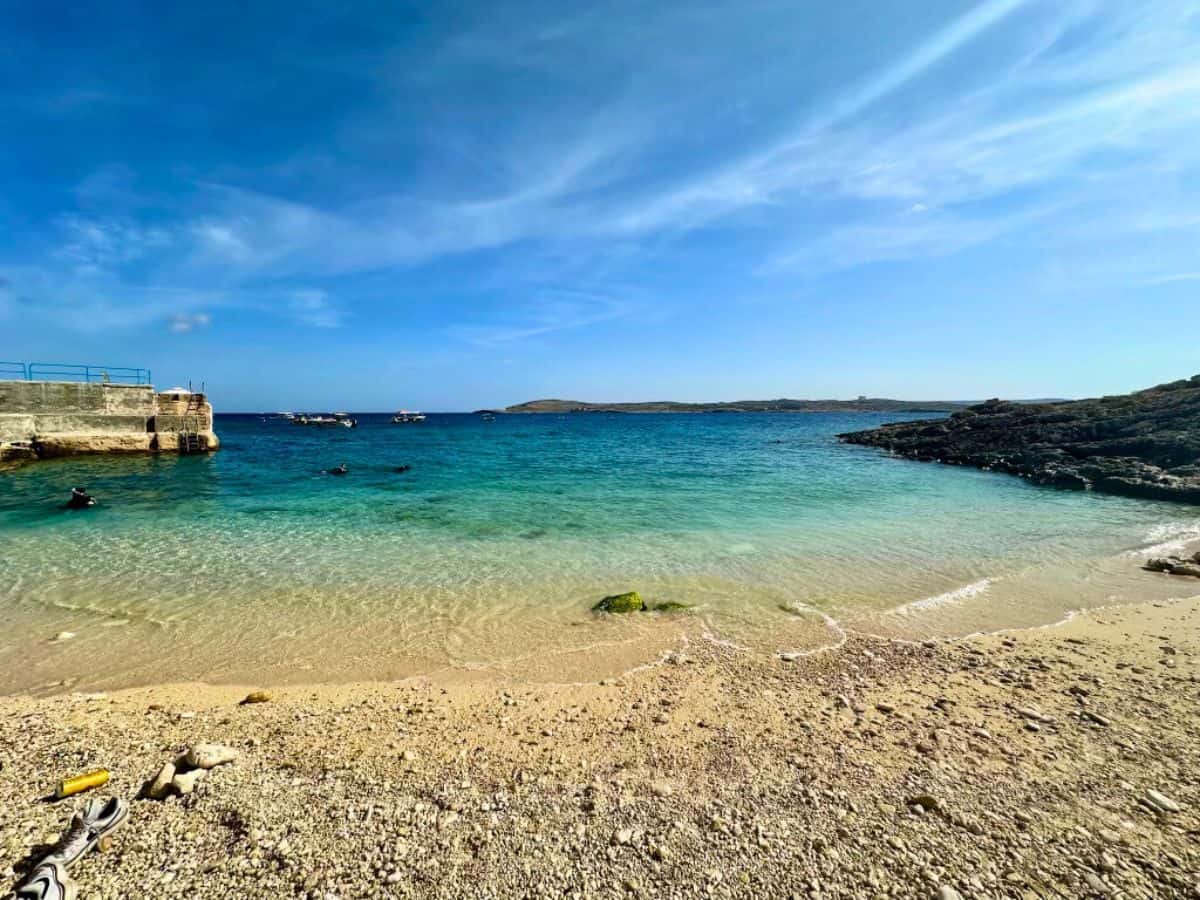
Malta’s waters shift noticeably with the seasons. In winter, water temperatures drop to around 15°C (59°F), while in late summer they can rise to 26–27°C (nearly 80°F) – perfect for long swims along the coast.
Even as the land warms in early spring, the water can still feel chilly, so plan accordingly. Here’s a seasonal snapshot for anyone looking to make the most of Malta’s swimming spots:
- December to April: Coldest months, averaging 15–16°C (59–61°F) – brisk for swimming, but still worth a look at the dramatic coastline.
- May to June: Transition months. Water warms from 17–18°C (62–64°F) in May to 21–22°C (70–72°F) in June, just right for early-season dips in sheltered coves.
- July to September: Peak swimming season, with waters around 24–26°C (75–79°F) – perfect for full days at sandy beaches or exploring hidden rocky pools.
- October to November: Still swimmable, with October averaging 23°C (73°F) and November cooling to 21°C (70°F). By this time, you can enjoy Malta’s waters with fewer crowds, especially in the quieter northern bays or sheltered coves.
Water temperature varies by location. Protected coves and small bays are often warmer and calmer, while open stretches of the Mediterranean can feel cooler due to deeper waters and currents.
Best Months for Swimming in Malta
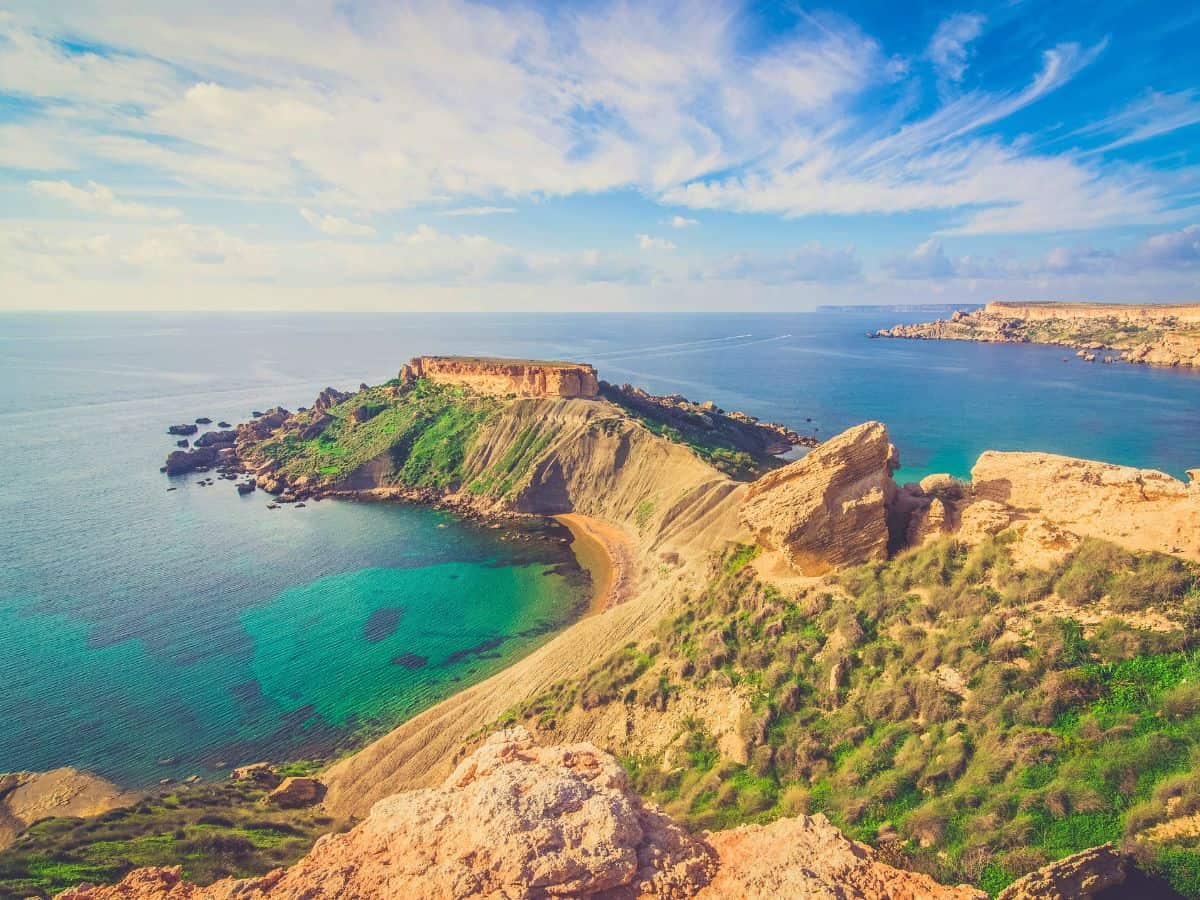
If you’re after the warmest water and sun-soaked beach days, the peak months for swimming in Malta are July through September. Water temperatures during this period are ideal for long swims, snorkeling in clear coves, or relaxing in natural pools. Beaches during this period are lively with locals and visitors alike, so it’s best to arrive early if you want space to spread out. For a quieter swim, head to smaller coves or plan an early-morning dip before the crowds arrive.
June and October offer a slightly different, but equally appealing, experience. In June, the water is warming up while the land temperatures remain pleasantly mild, perfect for combining swimming with exploring Malta’s scenic coastline.
October surprises many visitors with its still-warm water and far fewer crowds, making it an excellent time to enjoy rocky coves or sandy bays without the bustle of peak summer. It’s one of my favorite months to visit Malta, partly because of the often ideal swimming conditions – though of course, a rainy day can happen.
Even into November, swimming is possible, particularly in sheltered coves, although the water usually begins to cool more quickly.
One tip for avoiding crowds any time of year: weekdays tend to be quieter than weekends, when families and weekend travelers flock to the beaches. Still, if you’re only visiting Malta briefly, squeezing in a beach visit any day of the week is worth it.
Types of Swimming Spots in Malta

Malta is famously rocky. The islands formed around 5 million years ago when sedimentary rock layers were uplifted, and that geology shows everywhere, from limestone cliffs to jagged coves. For swimmers, that means Malta’s coastline is full of dramatic rocky entry points, natural pools, and secluded coves. While sandy beaches exist, much of Malta’s charm comes from its rugged, wild swimming spots.
Rocky Areas
Rocky swimming spots are abundant across Malta and Gozo. Some are easy to access, while others involve steep descents or scrambling over limestone slabs. Many swimmers are drawn to these areas for the adventure, and in some southern spots, cliff jumping is popular. The rocky terrain gives the water a vivid clarity and often creates small protected pools that feel secluded, even near busier beaches.
If you plan to explore rocky areas, water shoes are strongly recommended – they make getting in and out of the water safer and much more comfortable.
Sandy Beaches
Malta does have sandy stretches, particularly in the northern parts of the islands. These are the classic beach experiences: wide, golden sand, gentle slopes into the water, and space to lounge. Sandy beaches are perfect for a more traditional seaside day.
Even here, the sand often meets rocky edges, giving you a mix of soft beach and natural swimming terrain.
Coves and Natural Pools
Malta’s rocky coastline also gives rise to beautiful coves and natural pools. These spots are often shallow, making the water warmer and more approachable for kids or anyone who wants a relaxing swim. Many coves offer crystal-clear waters and a sense of adventure, as you explore small inlets, swim between rocks, or watch marine life in calm pools.
These natural pools highlight the unique character of Malta’s coastline – quiet, scenic, and perfect for soft adventure swimming.
Swimming in Malta: A Regional Guide
Even though Malta is a small island nation, you can find a surprising variety of swimming spots and blue flag beaches. This makes it easy to mix up your days: spend the morning at a sandy beach, the afternoon exploring a rocky cove, and finish with a sunset swim in a quiet bay.
To help you plan, I’m unpacking top swimming locations across Malta. Along the way I’ll highlight some of my personal favorite Malta beaches and spots for a swim.
Northern Malta: Sandy Beaches and Family-Friendly Spots
The north of Malta is where you’ll find most of the island’s sandy beaches, perfect for those who love soft sand and easy water entry. In a small geographic span, you can find a beach that suits your needs.
In the Northwest, Golden Bay, Ghajn Tuffieha, and Gnejna Bay are fantastic options, with beautiful golden sand, typically gentle waves, and west-facing shores that make sunset swims especially enjoyable. These popular beaches can get quite busy, especially on weekends. Plan to arrive early.
Further north, Paradise Bay and Mellieha Bay also offer sandy stretches, with Mellieha being the largest sandy beach on Malta – ideal for families or longer, relaxed swims.
Another great option in this area for beautiful, clear water swimming – a great alternative to the more crowded Blue Lagoon on Comino – is Armier Bay, with its multiple sandy beaches. Armier Bay Beach, Little Armier Beach, and White Tower Bay are all great swimming locations.
Further south, to the east of Mellieha, you’ll find Mistra Bay, a more secluded pebbly beach, with great hiking nearby. Around the other side of the expansive St. Paul’s Bay, Perched Beach is a beautiful man-made beach along St. Paul’s Bay.
Even in this northern cluster, you’ll find small rocky coves tucked between beaches, giving adventurous swimmers a chance to explore alongside more relaxed beach goers.
Central & Eastern Malta: Urban Swimming and Easy Access

Along Malta’s central and eastern coastline, swimming takes on a more urban character. These areas of Malta are densely developed and popular with both locals and visitors, but they still offer convenient access to the sea – especially if you’re staying in Sliema, St. Julian’s, or nearby towns.
Balluta Bay, tucked between St. Julian’s and Sliema, is a small sandy beach framed by historic buildings and cafés. It’s a popular spot for a quick dip and easy to reach on foot if you’re staying nearby. While it lacks the wild feel of some other popular Malta swimming locations, it’s a pleasant option for combining swimming with city life.
St. George’s Bay, adjacent to Paceville, offers sandy access and holds blue flag status. Its central location makes it appealing, though its tends to attract a younger crowd given its location. Fond Għadir Beach in Sliema is a long stretch of flat rock platforms – very popular with those living in or just visiting Sliema.
Swimming in this region is less about seclusion and more about convenience. These spots are ideal if you want a swim without venturing far from restaurants, promenades, and accommodations, though they’re best enjoyed early in the day before crowds build.
Southwest & Southern Malta: Rocky Coves, Natural Pools, and Wild Coastlines
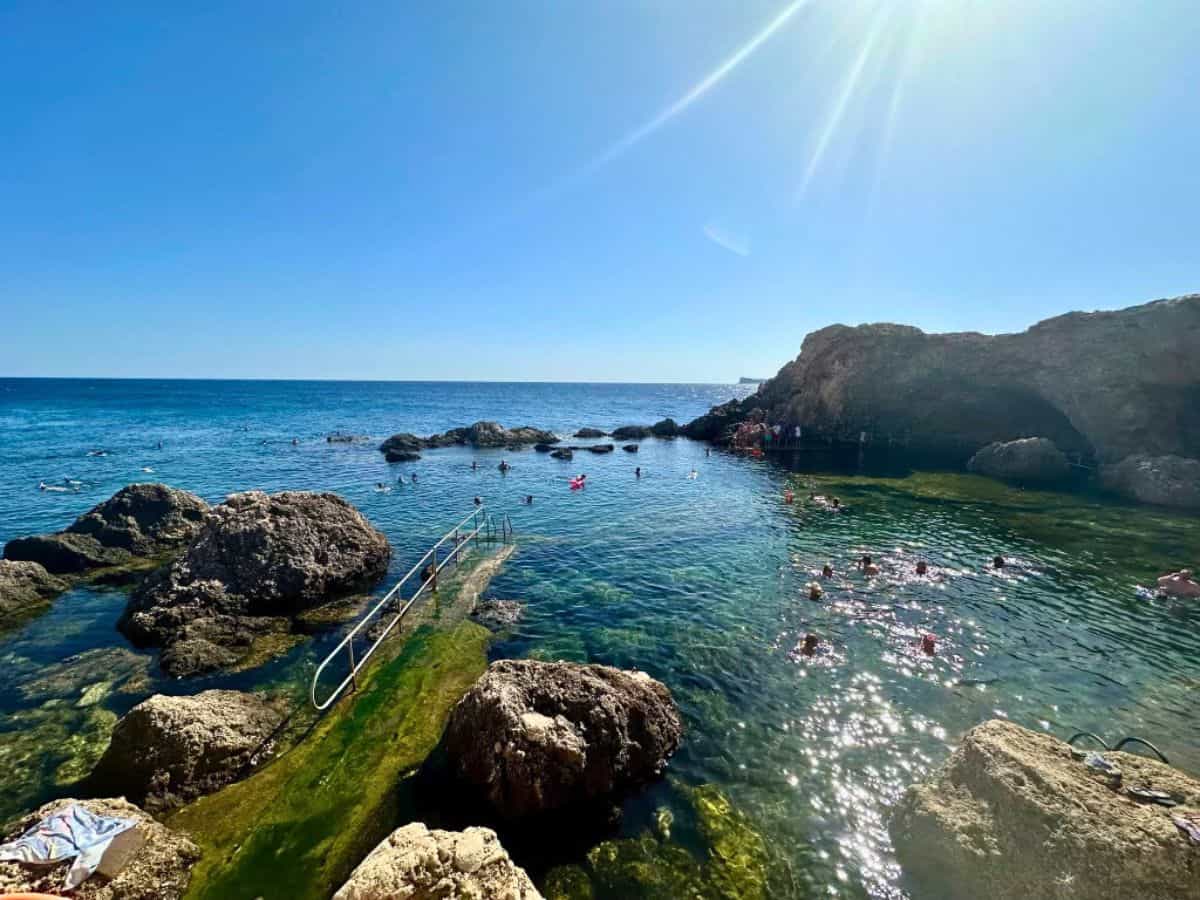
As you head south and west on Malta island, the coastline becomes noticeably more rugged. This region is defined by dramatic cliffs, rocky coves, and natural swimming pools where the water is often exceptionally clear. Here, water shoes make swimming more comfortable.
Ghar Lapsi, in Siggiewi, is one of the standout swimming spots in this part of Malta and one of my personal favorites. A natural pool carved into the rocky coastline, it offers calm, protected water that’s perfect for swimming and snorkeling. Entry is straightforward thanks to ramps and ladders, making it accessible for a wide range of swimmers. It’s a place that feels distinctly Maltese – wild, grounded, and deeply connected to the surrounding landscape.
Note: strong storms in Winter 2026 heavily damaged Ghar Lapsi. As of mid-2026, it was not possible to swim here. Check with locals on your visit to see if swimming here is an option.
Nearby, Wied iz-Zurrieq, close to the Blue Grotto, provides another excellent swimming location, particularly on calm days. The cove here opens to deeper water and is popular with swimmers, snorkelers, and boat tours.
Further east, St. Peter’s Pool near Marsaxlokk is known for its turquoise water and rock platforms. While cliff jumping is common here, there are also easier entry points for those who prefer a gentler swim. Kalanka Bay, just around the corner from St. Peter’s Pool, is often quieter and offers a more relaxed alternative with similarly clear water.
For something completely different, Pretty Bay – a rare sandy beach on Malta’s southern coast – offers easy swimming, though its industrial surroundings make it less scenic than other options.
Gozo: Slower Pace, Clear Water, and Excellent Snorkeling
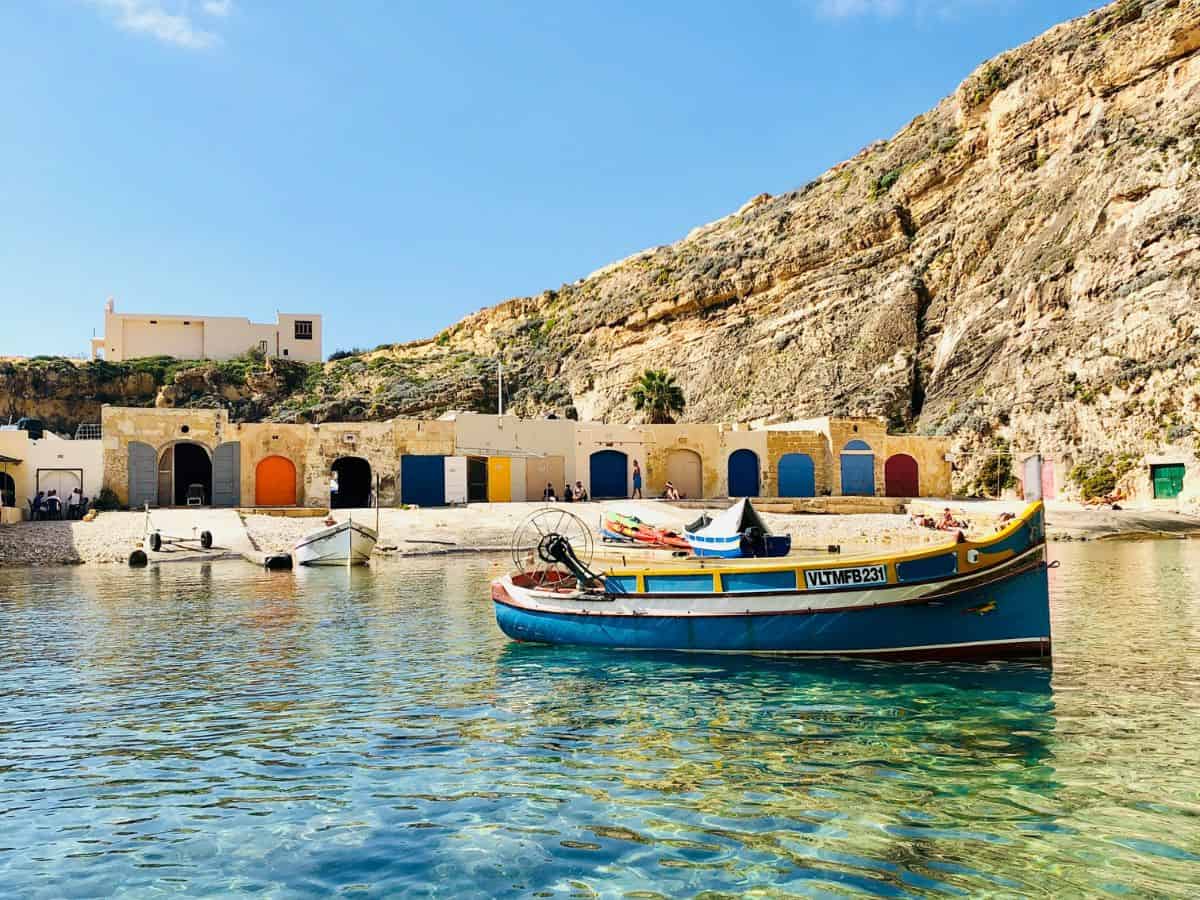
Malta’s sister island, Gozo, has a noticeably slower rhythm, and that extends to its swimming spots. While Gozo is smaller, it offers an impressive variety of beaches and coves, many of which feel less crowded than those on Malta island.
Hondoq ir-Rummien, on Gozo’s southeastern coast and directly across from Comino island, is one of my favorite places to swim in all of Malta. Its sheltered bay offers calm, clear water ideal for swimming and snorkeling, with views across to Comino. It’s also conveniently located just a short drive from the ferry terminal, making it an easy first or last stop on a Gozo visit – without the overwhelming crowds of the Blue Lagoon.
On Gozo’s northern coast, Ramla Bay stands out for its distinctive orange-red sand and blue flag status. Another standout swimming spot in this part of Gozo is Marsalforn Bay, which provides more urban-style swimming with easy access, while still offering good water quality with blue flag status.
For more secluded swims, Mgarr ix-Xini is a sheltered pebbly bay surrounded by steep valley walls, creating a quiet, enclosed swimming environment. Further west, Xlendi offers beautiful cove swimming with plenty of restaurants nearby.
Finally, Wied il-Ghasri and Dwejra Bay are excellent options for swimmers seeking something more rugged and less developed. Dwejra Bay (once home to the Azure Window) remains a dramatic swimming area, though conditions here can be rough and should always be checked carefully.
Gozo’s swimming spots are well-suited to lingering – whether that means a long afternoon swim, snorkeling along rocky edges, or simply enjoying the quieter pace that defines the island.
Comino: The Iconic Blue Lagoon (and Quieter Alternatives)

Comino is best known for the Blue Lagoon, and there’s no denying its beauty. The water here is a vivid turquoise, shallow near shore, and incredibly clear. Swimming in the Blue Lagoon feels almost unreal – but so do the crowds, especially in summer.
If you choose to visit, timing matters. Early morning can offer a more enjoyable experience, with fewer boats and day-trippers arriving. It’s also worth knowing that Comino has more to offer beyond the Blue Lagoon itself. For example, St. Nicholas Bay, about a 15-20 minute walk away, provides a quieter alternative with similarly clear water and fewer people.
Even with its popularity, Comino showcases a classic Maltese swimming landscape: rocky edges, sandy patches, and striking color contrasts in the water. With a bit of planning, it’s possible to enjoy a swim here without feeling overwhelmed.
Wrapping Up: Swimming in Malta

Swimming in Malta is more than just a way to cool off – it’s one of the best ways to experience the islands themselves. From sandy beaches in the north to rocky coves and natural pools carved into limestone cliffs, the coastline shapes your days here.
What makes Malta especially rewarding is how accessible this variety is. In a single day, you can float in calm, shallow coves, swim along dramatic rock formations, and watch the sun dip into the Mediterranean from a west-facing beach. The island’s small size means these experiences are never far apart, and the long swimming season makes it easy to build your trip around time in the water.
For me, swimming and exploring the coastline is one of the reasons Malta is so worth visiting. The sea isn’t just scenery here – it’s central to how you experience the islands and connect with the landscape. Whether you’re chasing crystal-clear coves, family-friendly beaches, or wild coastal swims, Malta rewards anyone willing to step into the water.